

If your sales team is drowning in more leads every month but revenue still isn’t moving, the problem almost certainly isn’t lead volume. It’s your B2B sales process. Sales leaders often respond to a flat pipeline by buying more leads, running more outbound campaigns, or hiring more reps, and that approach usually backfires because it pours more raw material into a system that already has cracks in it.
A B2B sales process is the structured set of steps a company uses to move a prospect from first contact to a signed deal. When that process breaks down at qualification, follow-up, handoffs, or accountability, adding leads just multiplies wasted hours and inflates pipeline numbers instead of closing the actual gap. This article walks through where leads typically die between initial interest and closed revenue, and offers a straightforward diagnostic you can run this week, before your next lead-gen investment.
Let’s start with why more volume alone rarely moves revenue.
Key Takeaways
More volume amplifies existing gaps in your B2B sales process instead of fixing them, wasting rep hours and inflating pipeline reports.
Leads typically break down at four points: qualification, follow-up, handoffs, and accountability.
A “bad lead” is a process problem, not a volume problem, since a contact and a qualified buyer are not the same thing.
A simple diagnostic sequence can show you exactly where deals stall before you spend on more outreach.
Fixing conversion at your current lead volume usually beats adding more raw activity on top.
In this article
- Why More B2B Sales Leads Don’t Automatically Mean More Revenue
- Where B2B Leads Actually Break Down Between Interest and Revenue
- A Step-By-Step Diagnostic To Run Before Buying More Leads
- How To Fix Conversion Before Adding More Sales Volume
- Wrapping Up
- Frequently Asked Questions
Why More B2B Sales Leads Don’t Automatically Mean More Revenue
Sales teams struggling despite growing lead counts are usually dealing with a process problem, not a volume problem. Adding more contacts into a B2B sales process that already leaks at qualification, follow-up, or ownership just multiplies the leaks, sending more unqualified names through the same broken pipeline. Reps spend more hours chasing meetings that never should have been booked, and the CRM (customer relationship management system) fills up with pipeline that never turns into revenue.
The data backs this up: recent B2B sales benchmark research analyzing $54bn in revenue found that organizations with a formalized sales process report 18% higher revenue growth and 13% shorter sales cycles than those without one, a gap that exists because a defined process fixes conversion at every stage, while lead volume only ever touches the top of the funnel.
Where B2B Leads Actually Break Down Between Interest and Revenue
Leads typically die at four predictable points in a B2B sales process, long before they reach a signed contract. Interest fades during qualification when reps chase contacts who were never a real fit, and it fades again when follow-up is slow, when handoffs between teams lose context, or when nobody owns the next step. Each of these points is measurable, which means you can find your specific bottleneck instead of guessing at one. The four sections below map out the warning signs and the fix for each.
Qualification gaps that let unqualified contacts masquerade as real leads and eat up rep time.
Follow-up delays that lose warm prospects to faster-moving competitors.
Handoff breakdowns between marketing, sales, and customer success that quietly lose context.
Accountability gaps where no one owns the next step, so deals just drift.
Qualification Gaps: Chasing Contacts Instead Of Real Buyers
A contact is just a name and an email address; a confirmed fit, genuine interest has confirmed fit, genuine interest, and a timeframe for buying. Weak qualification lets contacts masquerade as leads, and that shows up as high no-show rates, meetings that go nowhere, and reps re-qualifying prospects marketing already called sales-ready. The fix is defining your Ideal Customer Profile (ICP) and applying one consistent framework, like BANT or MEDDICC, before anything counts as a lead.
Follow-Up Delays: Losing Deals To Slow Response Times
Speed matters more than most sales teams realize. Companies that respond to a new lead within five minutes are 100 times more likely to connect with that prospect than those who wait 30 minutes. Leads sitting unanswered in a shared inbox, no clear owner for the first response, and one-off touchpoints instead of a real sequence all quietly kill deals. Set response-time SLAs (service level agreements) and track time-to-first-contact as a core metric.
Handoff Breakdowns: Where Context Gets Lost Between Teams
Deals often stall the moment they move from one team to another. Marketing and sales frequently define a good lead differently, which inflates cost-per-meeting and forces reps to re-qualify everything themselves before they trust it. The same problem repeats later, when a sloppy sales-to-customer-success handoff causes missed expectations and slows onboarding. Fixing this means agreeing on shared lead definitions, documenting context directly in the documenting context directly, and building mutual action plans between teams.
Accountability Gaps: No Clear Owner For Next Steps
Genuine interest still dies when nobody owns what happens next. Deals can drift for months because no single person is responsible for the next call, email, or decision, and activity metrics like calls made or emails sent can look strong while conversion stays flat stays flat.
Activity without strategy is just busywork.
The fix is setting verifiable exit criteria for every stage and naming one clear owner for each next step.
A Step-By-Step Diagnostic To Run Before Buying More Leads
Before spending another dollar on lead generation, run a quick diagnostic across your existing B2B sales process to find out exactly where deals are stalling. This sequence takes a few hours with data you likely already have in your CRM, and it tells you whether the real problem is qualification, follow-up, handoffs, or ownership. Fixing the bottleneck you find here almost always produces faster results than adding more top-of-funnel volume.
Step 1: Audit Your Current Pipeline Conversion Rates By Stage
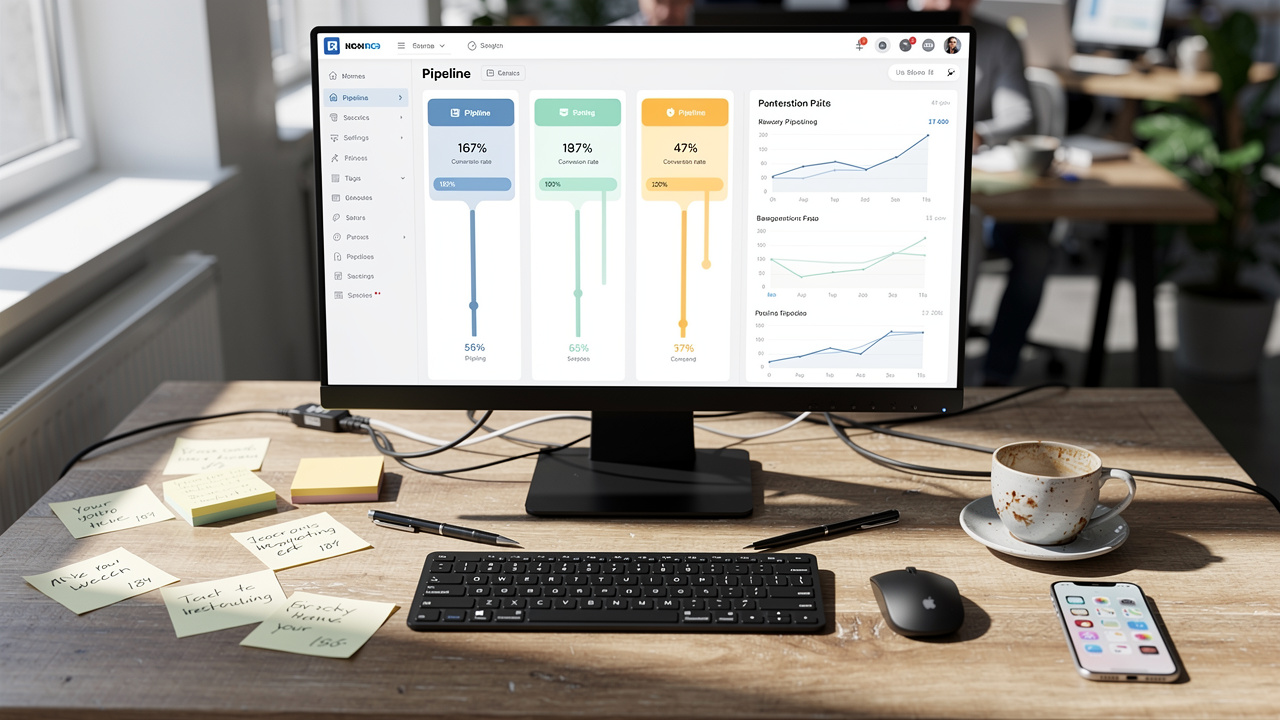
Pull stage-by-stage stage-by-stage conversion rates and average time-in-stage straight from your CRM, whether that’s Salesforce, HubSpot, or another system. Look for the single stage with the steepest drop-off in your process, whether that’s discovery-to-demo or proposal-to-close. That stage, not your top-of-funnel lead count, is where your attention and budget should go first.
Step 2: Check Whether Marketing And Sales Agree On Lead Definitions

Compare how marketing defines a marketing-qualified lead against how sales defines a lead worth working. If reps routinely ignore leads marketing calls qualified, or if they re-qualify almost every one themselves before booking a meeting, that mismatch is quietly wasting your team’s time and inflating your reported pipeline.
Step 3: Review Follow-Up Speed And Consistency
Measure your average time-to-first-contact against the five-minute benchmark, and consider that detailed cold-call metrics show how many touches it typically takes to book a single meeting, so you can see how far off your team runs. Check whether leads receive a real multi-touch sequence across email, phone, and LinkedIn, or whether they get one message and then silence. Consistency here often reveals more than raw speed alone.
Step 4: Map Ownership At Every Handoff Point

List every handoff in your process, marketing to sales, sales development representative to closer, and sales to onboarding, then assign one named owner to each. Add clear exit criteria based on buyer actions, not rep opinion, so progress through your sales process improvement efforts is easy to verify.
How To Fix Conversion Before Adding More Sales Volume

Fixing conversion at your current lead volume almost always beats adding more outreach on top of a shaky B2B sales process. Coaching reps on qualification discipline, sharper objection handling, and demos tied to real buyer pain typically lifts win rates more than a bigger top-of-funnel push. A rep who converts 30% of qualified meetings instead of 20% needs far fewer leads to hit the same number, which is why a lead conversion strategy beats a volume-only approach every time.
Some outbound partners build this discipline in from day one instead of just adding dial volume. Superhuman Prospecting, for example, certifies every appointment through a dedicated quality control team before it reaches a client’s calendar, and its Supervision dashboard gives sales leaders real-time visibility into qualification notes, not just call counts. That kind of transparency helps surface process gaps instead of masking them with more raw activity.
Wrapping Up
More leads were never going to fix a sales process that already leaks at qualification, follow-up, handoffs, or accountability. The fastest path to more revenue is usually hiding in the pipeline you already have, not the one you’re planning to buy. Run the diagnostic first, audit conversion rates by stage, align marketing and sales on what counts as a lead, check follow-up speed, and map ownership at every handoff, before you spend another dollar chasing volume.
Sales process improvement compounds in a way that lead spikes never do, and it protects the budget you’re already spending on outreach. Whether you fix this in-house or bring in a partner like Superhuman Prospecting to build qualification discipline into your outbound motion, the sequence stays the same: diagnose first, then scale.
Frequently Asked Questions
How Do I Know If My Sales Process Is Broken Instead Of Just Needing More Leads?
Watch for a full pipeline with flat close rates, reps spending time on unqualified meetings, and deals stalling without a clear next step. If conversion at one particular stage stays low no matter how many leads you add, that’s a process problem in your B2B sales process, not a volume problem.
What’s The Difference Between A Lead And A Qualified Opportunity?
A lead is just contact information, a name, email, or phone number with no confirmed fit. A qualified opportunity has verified budget, authority, need, and a realistic timeline. Treating the two as the same thing inflates your pipeline numbers without inflating actual revenue.
How Often Should Sales And Marketing Realign On Lead Definitions?
Review lead scoring criteria and conversion data at least once per quarter so both teams work from the same lead definition. Fast-changing markets, new product launches, or a shift in your ideal customer profile usually call for more frequent check-ins than a standard quarterly schedule.
What Metrics Best Reveal Where My Sales Process Is Breaking Down?
Track stage-by-stage conversion rate, time-in-stage, and proposal-to-close rate to spot exactly where deals stall. Pipeline velocity, opportunities multiplied by average deal size and win rate, divided by sales cycle length, gives one number that reveals the overall health of your B2B sales process.
Can Better Follow-Up Alone Fix A Broken Sales Process?
Faster follow-up helps, but it won’t fix weak qualification upstream or unclear ownership downstream. A prospect who gets a five-minute response but was never a real fit still won’t close. Lasting improvement requires addressing qualification, follow-up, handoffs, and accountability together, not just one piece alone.
How Long Does It Take To Fix A Broken B2B Sales Process?
Quick wins like faster response times and clearer ownership can show results within a few weeks. Fixing qualification standards and sales-marketing alignment usually takes one to two quarters to fully take hold. Process fixes compound over time, unlike a short-term spike from buying more leads.