

Most leadership meetings in growing B2B companies follow the same tired script. Each department head takes a turn reading off numbers, the clock runs out before anyone tackles the real problem, and action items quietly vanish before the next meeting rolls around. If you’re searching for a better leadership meeting agenda, the short answer is this: a weekly, time-boxed structure built around five or six fixed segments, with metrics shared ahead of time, a rotating hot seat for roadblocks, and clear owners assigned to every decision before anyone leaves the room.
This article walks through exactly how to build that structure. You’ll get a breakdown of each agenda segment, a copy-ready sample agenda, and a handful of simple habits that keep B2B management meetings short and useful instead of long and draining. We’ll also touch on how clean, verified data (something our team at Superhuman Prospecting pays close attention to) makes metrics reviews faster for sales leaders specifically. By the end, you’ll have a template you can drop into your calendar this week.
Key Takeaways
A solid leadership meeting agenda has 5 to 6 fixed parts, not a loose list of whatever feels urgent that day.
Metrics should get shared before the meeting through a dashboard, not explained live during it.
The red, yellow, and green method speeds up status reviews so time goes to problems, not updates.
Every decision needs an owner and a deadline attached, or it disappears into the shuffle.
A weekly cadence beats sporadic “whenever we have time” meetings, giving you 52 chances a year to catch issues early.
In this article
- What Makes A Leadership Meeting Agenda Different From A Regular Team Meeting?
- How Often Should Leadership Teams Meet?
- The Weekly Leadership Meeting Agenda: A Simple Structure That Works
- Sample Weekly Leadership Meeting Agenda (Copy This Template)
- Best Practices For Shorter, More Productive Leadership Meetings
- Wrapping Up
- Frequently Asked Questions
What Makes A Leadership Meeting Agenda Different From A Regular Team Meeting?
A leadership meeting agenda exists to solve cross-functional problems and make group decisions, not to collect individual status reports. The people in the room run sales, marketing, operations, and finance, and most of what they face each week touches more than one department at once. A pricing change affects both sales and finance. A hiring freeze touches ops and customer success. These are not issues one person can solve alone, which is exactly why they need a dedicated weekly session instead of a Slack thread.
Without a clear structure, these meetings tend to drift into a string of individual updates that could have been an email, and large companies alone can lose up to $100 million annually to this kind of unnecessary meeting time. Organizations waste an estimated $37 billion a year on unproductive meetings, a figure detailed in research on the billion dollar meeting problem, with only around 30% of meetings considered genuinely useful by the people sitting in them. A good agenda protects against that by forcing every minute toward a decision, a roadblock, or an action item instead of a recap.
How Often Should Leadership Teams Meet?
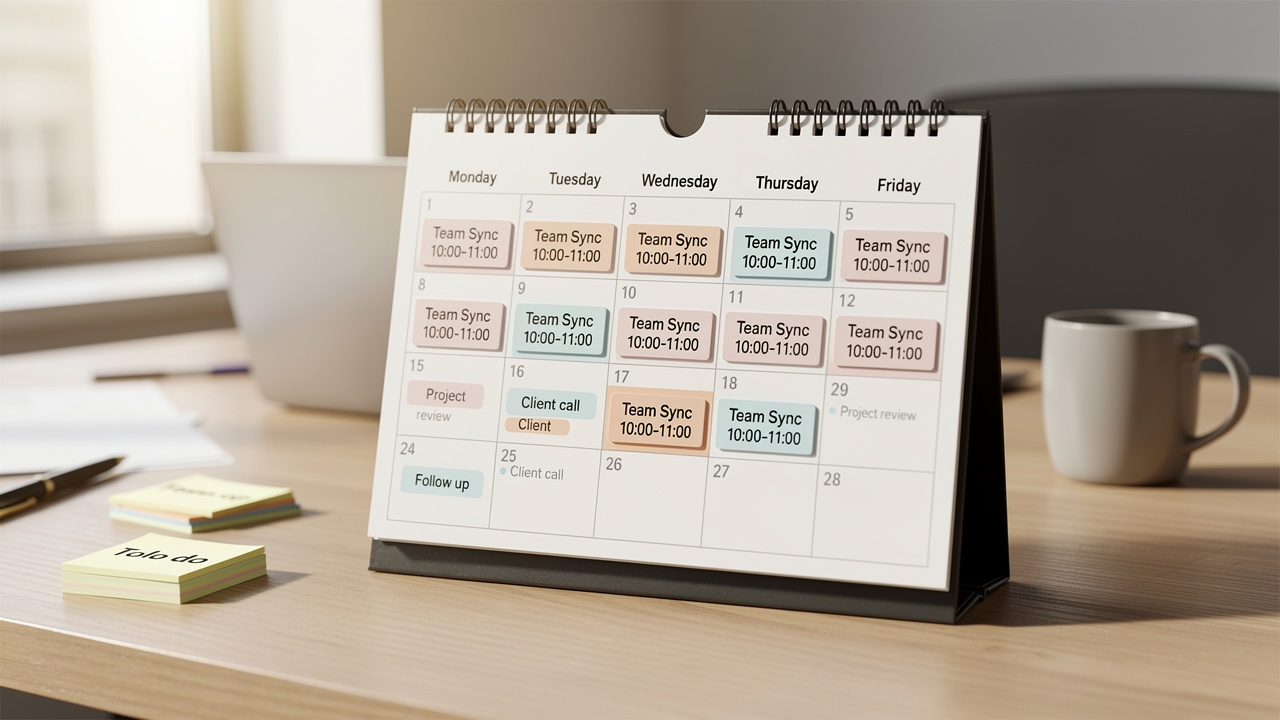
Weekly is the right cadence for most growing B2B leadership teams, and it beats monthly or “as needed” scheduling by a wide margin. A weekly meeting gives your team 52 structured chances a year to catch small problems while they’re still small, rather than discovering them three months later once they’ve turned expensive. Teams that meet sporadically tend to spend the first 20 minutes of every meeting just getting back up to speed, which eats into the time left for actual decisions, and broader workplace data shows professionals already spend 15-18 hours a week in meetings while rating 72% of them ineffective.
Set a fixed day and time, then protect it the way you’d protect a client call. Moving the meeting around because the calendar got busy sends a quiet signal that it doesn’t actually matter, and that signal spreads fast through a leadership team. Once the habit breaks, it’s hard to rebuild.
The Weekly Leadership Meeting Agenda: A Simple Structure That Works
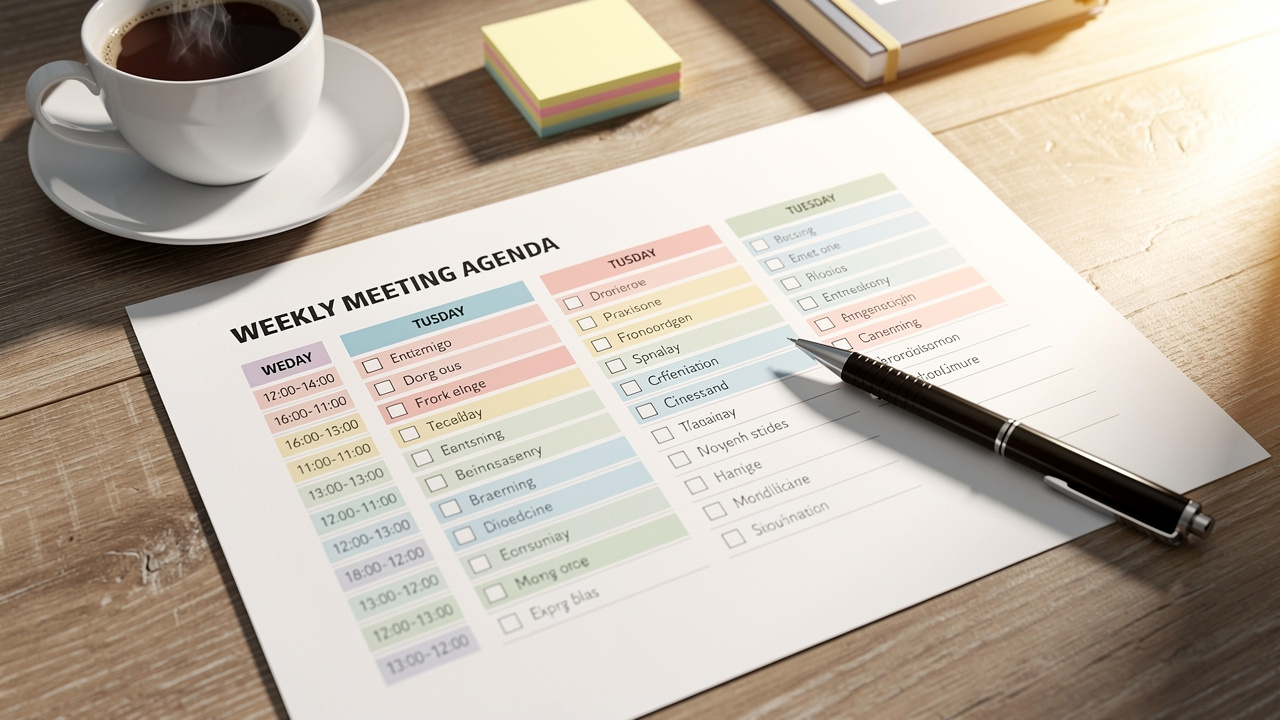
An effective weekly leadership meeting breaks into five or six fixed segments, each with its own purpose and a tight time limit, so every session covers the same ground without drifting into whatever topic feels loudest that day. This consistency matters more than people expect. When everyone knows the meeting opens with a quick check-in, moves into metrics, then roadblocks, then decisions, then action items, nobody wastes time wondering what’s coming next or whether their topic will get air time. The structure itself does a lot of the work of running the meeting, which means you spend less energy managing it and more energy actually using it. Below is how each segment works and why it earns its spot on the agenda.
Quick Personal Check-In (2 To 3 Minutes)
This opening segment asks each person for one short sentence, a weekend highlight, a personal win, or whatever’s on their mind that day. It sounds small, almost unnecessary for a group of busy executives, but it does real work. People who feel seen as humans, not just job titles, speak up more honestly once the harder topics come up later in the meeting.
Metrics Review Using Red, Yellow, Green

The metrics segment works best when leaders pick three to five numbers the whole team tracks every single week, things like revenue, pipeline value, or customer retention, rather than trying to cover every metric from every department. Share the dashboard the night before so people arrive already knowing the numbers and show up with questions instead of blank stares, a habit worth building since nearly a third of scheduled meetings end up canceled last minute or run ineffectively anyway. During the meeting itself, each leader marks their metric green if it’s on track, yellow if it needs watching, or red if it needs real discussion right now.
This small habit changes the whole pace of the meeting:
Green items get a nod and move on in seconds.
Yellow items get a brief note.
Red items get the bulk of your discussion time.
You end up spending your meeting on the two or three numbers that actually need a room full of smart people, instead of reading every metric out loud one by one.
Roadblocks And The Hot Seat

One leader takes the hot seat each week, rotating through the group so every function gets its turn over time, and uses a few minutes to lay out their biggest current blocker in real detail. The framing matters here. This works best as “here’s where I need help,” not a performance review where the person feels like they’re defending their department.
When it’s framed that way, peer leaders tend to jump in with actual solutions, extra resources, or a connection the presenting leader hadn’t thought of. A sales leader stuck on a staffing gap might get an offer of temporary support from ops. A marketing leader struggling with lead quality might get direct input from the sales side on what’s actually converting.
Decisions That Need The Group
This segment exists for the one or two real decisions that genuinely need the whole leadership team’s input, not every small question that came up earlier in the meeting. Part of running this well is pushing lower-priority issues to next week or a separate smaller conversation instead of letting them eat into group time. Trying to solve everything in one sitting is how meetings run 90 minutes long and still end without clear answers.
The goal here is a firm decision before moving to the next topic, not an open-ended debate that circles back again next week. If the group can’t decide in the time allotted, assign someone to gather more information and bring a recommendation back, rather than leaving the topic hanging.
Action Items And Accountability
Every decision made during the meeting needs a named owner and a real deadline attached before anyone logs off or leaves the room. Vague ownership is the single fastest way for a good decision to quietly die between meetings. Send a short recap within an hour, listing what got decided, who owns what, and by when, so nobody’s relying on memory three days later.
The next meeting should open by reviewing what got done from last week’s list before moving into new business. This closes the loop and builds a habit where people know their commitments will actually get checked, which tends to improve follow-through more than any reminder email ever could.
Sample Weekly Leadership Meeting Agenda (Copy This Template)
Here’s a time-boxed version you can paste straight into your next calendar invite, built for a 60-minute meeting with a leadership team of four to six people. It follows the exact structure covered above, just with time stamps attached so your meeting stays on pace instead of running long.
Minutes 0 to 3, Personal check-in. One sentence per person, nothing heavier.
Minutes 3 to 18, Metrics review. Red, yellow, green status on 3 to 5 shared numbers, dashboard pre-shared the day before.
Minutes 18 to 33, Hot seat. One rotating leader walks through their biggest blocker and gets peer input.
Minutes 33 to 48, Group decisions. One or two items that genuinely need full-team input, pushed toward a clear call.
Minutes 48 to 58, Action items. Owners and deadlines assigned out loud, recorded in a shared doc.
Minutes 58 to 60, Quick wins or messages. Anything worth celebrating or communicating to the wider team.
Adjust the minute counts based on your team size, but keep the order intact since each segment builds on the one before it.
Best Practices For Shorter, More Productive Leadership Meetings
A good agenda only gets you halfway there; the habits around it determine whether meetings actually stay short and useful week after week.
Start on time even if someone’s missing, since waiting rewards lateness and punishes everyone who showed up on time.
Put phones and laptops away unless someone’s pulling up a shared document the group needs.
Send pre-read materials at least 24 hours ahead so people arrive with opinions instead of needing a catch-up.
Stay on “how do we fix this” rather than “whose fault is this” when a problem surfaces, since blame conversations burn time without producing a single action item.
One quiet driver behind fast metrics reviews is simply having clean, trustworthy numbers to begin with. When pipeline data is scattered across spreadsheets, half-updated CRMs, and someone’s personal notes, the metrics segment turns into a debate about whose numbers are right before anyone even gets to discuss what to do about them. At Superhuman Prospecting, every call and appointment gets scored and certified by a dedicated quality control team before it ever shows up in a client’s reporting, which means the pipeline numbers a sales leader brings into their leadership meeting are already verified rather than guessed at. That kind of single source of truth is worth building toward regardless of where your data comes from, because a leadership meeting can only move as fast as the data feeding it.
Wrapping Up
A repeatable five or six part agenda, run on the same day every week, turns leadership meetings from a parade of status updates into an actual decision-making engine. The structure does most of the heavy lifting: personal check-in, metrics review, roadblocks, group decisions, and action items, each with its own time box and its own purpose. Start with the sample template above and adjust the minute counts as your team grows, but resist the urge to add extra agenda items just because they feel important in the moment.
Better meetings start with better inputs, and that includes the sales and pipeline numbers leadership teams argue over most. Whether that means cleaning up your CRM, standardizing how your team logs calls, or working with a partner that keeps lead and appointment data certified before it reaches your dashboard, the principle holds. Clear data in, clear decisions out.
Frequently Asked Questions
How Long Should A Weekly Leadership Meeting Be?
Most growing B2B teams do well with 45 to 60 minutes for a weekly leadership meeting. Longer meetings usually signal that something upstream went wrong, like metrics not being shared ahead of time or too many topics competing for the same hour, rather than the topics themselves being more important.
Who Should Attend A Leadership Meeting?
The heads of each major function should attend, typically sales, marketing, operations, finance, and customer success. Keep the group small enough that everyone can speak and contribute meaningfully in one hour. A large room built for status reporting defeats the purpose of a meeting meant for real discussion and decisions.
What’s The Difference Between Weekly, Monthly, And Quarterly Leadership Meetings?
Weekly meetings handle fast-moving tactical issues and metric reviews that need attention right away. Monthly meetings step back to look at patterns, staffing needs, budget questions, and bottlenecks between departments. Quarterly meetings go further, reviewing the past quarter and setting strategy for the next one, often during a longer off-site session.
How Do You Keep A Leadership Meeting From Turning Into Status Updates?
Require status information to be shared in writing before the meeting starts, through a shared doc or dashboard, so people arrive already informed. Reserve the actual meeting time strictly for discussion, roadblocks, and decisions rather than reading numbers out loud. This single change prevents most of the drift toward status-update meetings.
What Tools Help Run Or Track Leadership Meeting Action Items?
Shared documents, project management tools like Asana, Jira, or Linear, or even a simple recap email all work fine for tracking action items. The specific tool matters far less than the discipline behind it, meaning every item needs a named owner and an actual deadline attached before the meeting ends.