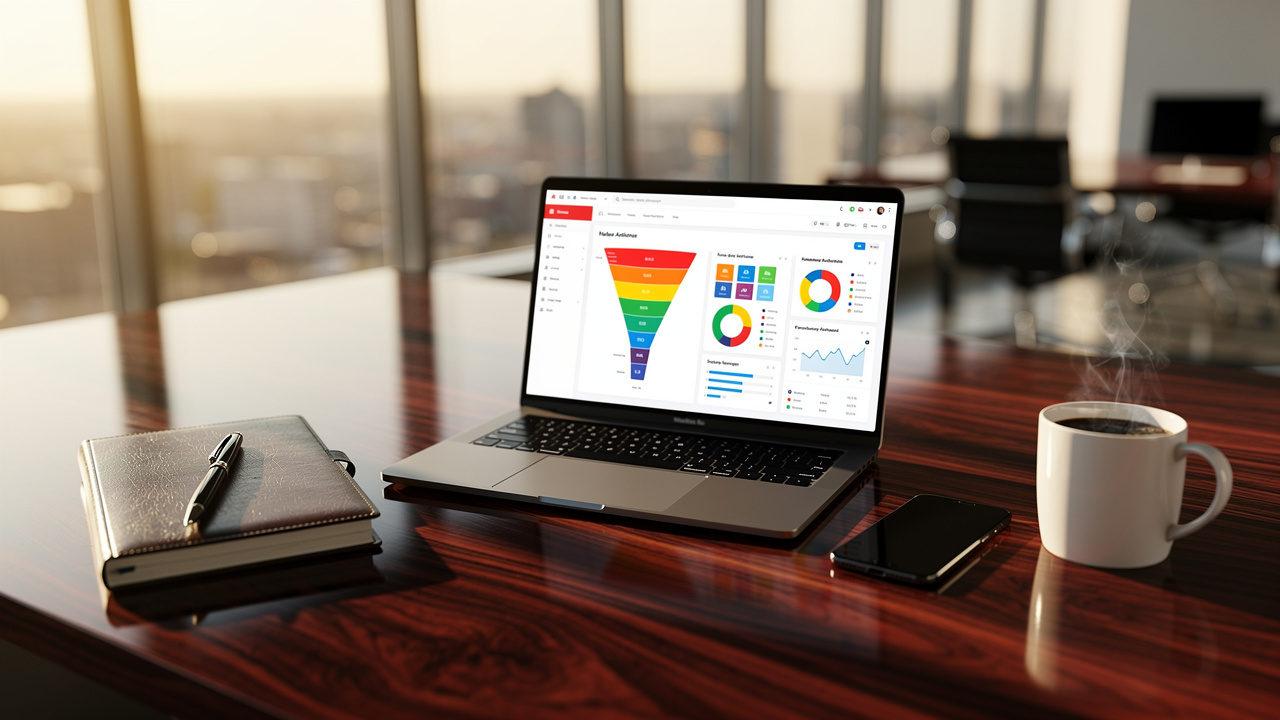

In today’s hyper-competitive sales landscape, traditional approaches to finding and engaging prospects no longer guarantee success. Gone are the days when sales teams could rely on sheer intuition, gut feelings, or a static list of names. In their place, a new era of efficiency and precision has emerged: data-driven prospecting. At the heart of this transformation lies the power of sales prospecting analytics—the art and science of harnessing data to identify and prioritize the most promising leads.
This evolution is more than a technological shift—it’s a mindset change. Businesses that embrace analytics-driven sales prospecting are unlocking new levels of productivity, revenue growth, and customer alignment. If reaching the right prospects at the right time has ever felt like searching for a needle in a haystack, leveraging analytics provides the magnet needed to find that needle quickly and efficiently.
Let’s dive deep into how sales prospecting analytics revolutionizes the way businesses discover, qualify, and win their hottest leads—and how you can harness this approach to supercharge your own sales pipeline.
A New Age for Sales Prospecting
Sales prospecting, at its core, is about identifying potential customers and beginning the journey of transforming them from strangers to loyal clients. For decades, prospecting involved cold calls, generic email blasts, and reliance on sales reps’ intuition. While persistence mattered, efficiency often suffered; many hours were wasted on leads that were never likely to convert.
The advent of modern analytics platforms, CRM systems+, and data enrichment tools has fundamentally changed the game. Today, sales teams can access vast reservoirs of customer data—from purchase histories and website behaviors to social media activity and engagement signals. The challenge is no longer data scarcity but knowing how to analyze this wealth of information to pinpoint genuine sales opportunities.
Sales prospecting analytics combines these sources to evaluate which leads show the most promise, why they are considered “hot,” and when and how they should be approached. Whether you’re a sales leader at a technology startup or an account manager at an established enterprise, understanding and applying these analytics will streamline your prospecting process and deliver better results, faster.
Why Data-Driven Prospecting Matters
The benefits of adopting a data-driven prospecting approach are manifold. At its simplest, it allows you to work smarter—not harder. Instead of casting a wide net in hopes of catching a few fish, analytics helps you drop your line precisely where the fish are biting.
1. Increased Efficiency and Productivity
By aggregating and analyzing lead data, sales teams can easily separate high-potential prospects from those with low conversion probability. Automated lead scoring, intelligent segmentation, and predictive analytics enable sales professionals to allocate their time and effort where it matters most. This means fewer wasted calls, more meaningful conversations, and a clearer line of sight to monthly or quarterly targets.
2. Improved Lead Qualification
Data-driven prospecting empowers reps to qualify leads objectively. Rather than relying solely on personal judgment, teams use quantifiable metrics—from past buying behavior to firmographics—to assess a lead’s fit and readiness. This reduces bias, increases conversion rates, and ensures that only the most promising leads are passed to closing.
3. Personalized Outreach
Analytics provide deep insight into what motivates and interests each prospect. With a thorough understanding of the buyer’s journey, sales reps can tailor their outreach, ensuring every message resonates with the recipient’s needs and challenges. Instead of one-size-fits-all pitches, personalization fosters trust and increases the likelihood of engagement.
4. Predictive Capabilities
Perhaps the most exciting feature of sales prospecting analytics is the ability to predict future actions. Machine learning algorithms can identify patterns in your historical sales data and suggest which leads are most likely to convert. Such predictive insights enable proactive selling, helping your team reach out to leads at the moment they’re most receptive.
The Core Components of Sales Prospecting Analytics
Breaking down the process, several key elements underpin effective analytics-driven prospecting:
Lead Scoring Models
Lead scoring is the foundation of analytic prospecting. By assigning numeric values to different prospect attributes (such as company size, job title, industry, engagement level, and more), you can quantify a lead’s potential. These scores are dynamic and adjust as new data arrives or behaviors change, ensuring that your team’s attention is always fixed on the hottest opportunities.
Behavioral and Demographic Analysis
Behavioral analytics track how prospects interact with your website, emails, ads, and more. Did a lead download a whitepaper, attend a webinar, or spend time on your pricing page? These activities are strong purchase signals. Combining these with demographic (who they are) and firmographic (company-level) data allows for multi-dimensional lead profiling.
Integrating Diverse Data Sources
Effective sales prospecting analytics require the integration of multiple data streams—CRM records, marketing automation outputs, social media insights, even third-party databases. Centralizing this information grants a comprehensive, real-time view of each lead. Unified data ecosystems reduce guesswork and enable true 360-degree lead understanding.
Machine Learning and AI
Advanced teams are taking prospecting to the next level with artificial intelligence. Machine learning can analyze massive datasets, uncover hidden patterns, and continually refine models for lead scoring and prioritization. This means your prospecting process only gets smarter over time, automatically adapting to changing buyer behaviors and market trends.
Implementing Analytics-Driven Prospecting: Best Practices
Transitioning to an analytics-led approach doesn’t happen overnight. It requires the right technology stack, cross-departmental collaboration, and a commitment to continuous learning and improvement.
Start with Clear Objectives.
Define what a “hot lead” looks like for your business. Is it a company of a certain size, in a specific industry, exhibiting particular behaviors? Agreement on these fundamentals ensures everyone works toward the same goal.
Invest in the Right Tools.
A modern CRM is essential, but so is marketing automation software, data enrichment services, and analytic platforms. These tools must integrate smoothly so that data is consistent, accessible, and actionable.
Align Sales and Marketing.
Marketing teams often generate and nurture early-stage leads, while sales teams focus on closing. Strong alignment ensures analytics are used to their full potential, with shared metrics defining lead quality and handoff points.
Continuous Data Hygiene.
Analytics are only as powerful as the data fueling them. Regularly clean your database, remove duplicates, and enrich records to avoid poor decision-making based on incomplete or inaccurate information.
Monitor, Measure, Refine.
Data-driven prospecting is a journey, not a destination. Use analytics not just to qualify leads, but also to assess your own processes. Regularly review which sources and tactics yield the most conversions, then iterate and improve.
Common Pitfalls and How to Avoid Them
Despite the clear advantages, organizations sometimes stumble when implementing sales prospecting analytics. Common challenges include:
- Data Overwhelm: With too much data and not enough clarity, teams can struggle to extract actionable insights. Focus initially on a few high-impact metrics and expand as your comfort with analytics grows.
- Incomplete Integration: Siloed systems create blind spots and data inconsistencies. Ensure marketing, sales, and customer success platforms are integrated for a seamless information flow.
- Over-Automation: While automation boosts efficiency, don’t lose the human touch. Use analytics to inform outreach, but let skilled sales professionals build authentic relationships.
Real-World Impact: Stories from the Field
Organizations that have embraced sales prospecting analytics are seeing tangible, measurable results. Consider the SaaS company that adopted predictive lead scoring, increasing its lead-to-customer conversion rate by 40% within just six months. Or the B2B services firm that integrated website behavioral data, enabling its sales team to respond in real time when prospects showed high purchase intent, resulting in faster sales cycles and larger deal sizes.
Such outcomes aren’t unique to large enterprises. Even small and mid-sized companies are leveraging analytics to compete against industry giants, showing that data-driven prospecting levels the playing field and empowers all sales teams to act with greater precision.
The Future of Prospecting: Smarter, Faster, and More Human
As technological advancements continue apace, expect analytics-driven prospecting to become even more sophisticated. Machine learning models will grow smarter, data sources will multiply, and predictive accuracy will increase. Yet, even as the tools improve, the most successful organizations will remember that sales remain a distinctly human pursuit. Analytics can tell you whom to contact and when, but it’s the rapport and trust built by skilled professionals that ultimately close the deal.
Conclusion: Taking the Next Step in Sales Prospecting Analytics
In a world where competition is fierce, and customer attention is fleeting, sales prospecting analytics provide the edge your business needs to thrive. By harnessing data, companies can shift from a scattershot approach to a focused, efficient, and highly effective form of lead generation and qualification.
Embracing data-driven prospecting means:
- Increasing efficiency by focusing on high-potential leads,
- Improving lead qualification through objective scoring,
- Delivering personalized, resonant messages,
- And leveraging predictive capabilities to get ahead of the competition.
For organizations ready to embark on this journey, the first steps are clear: define what success looks like, invest in the right technology, align your teams, maintain impeccable data hygiene, and never stop refining your approach. Final Thoughts: The future of sales belongs to those who blend the power of analytics with the artistry of relationship building. Start integrating sales prospecting analytics today, and set your organization on the path to more qualified leads, higher conversion rates, and sustainable growth.
FAQ: Data-Driven Prospecting & Sales Prospecting Analytics
1. What is sales prospecting analytics?
Sales prospecting analytics refers to using data analysis techniques and tools to identify, score, and prioritize sales leads based on their likelihood to convert. It incorporates information from a variety of sources to help sales teams focus on the most promising prospects.
2. How does data-driven prospecting improve sales outcomes?
Data-driven prospecting enables sales teams to target their efforts on leads with the highest conversion probability, personalize outreach, and reduce time wasted on low-value leads. This leads to better win rates, shorter sales cycles, and higher overall productivity.
3. Which data sources are most important for analytics-driven prospecting?
Effective prospecting analytics pull from CRM systems, marketing automation platforms, website analytics, social media interactions, and third-party enrichment services. The goal is to create a comprehensive view of each prospect’s behaviors and characteristics.
4. Is sales prospecting analytics only for large organizations?
Not at all! Businesses of any size can leverage prospecting analytics. There are many scalable tools and platforms available today, making data-driven approaches accessible for small and mid-sized teams as well as large enterprises.
5. What’s the first step to getting started with data-driven prospecting?
Begin by defining what constitutes a “hot lead” for your organization. Align your sales and marketing teams on this definition, audit your data for accuracy, and choose prospecting tools that integrate well with your current workflow. Start small, measure results, and refine your approach as you learn.