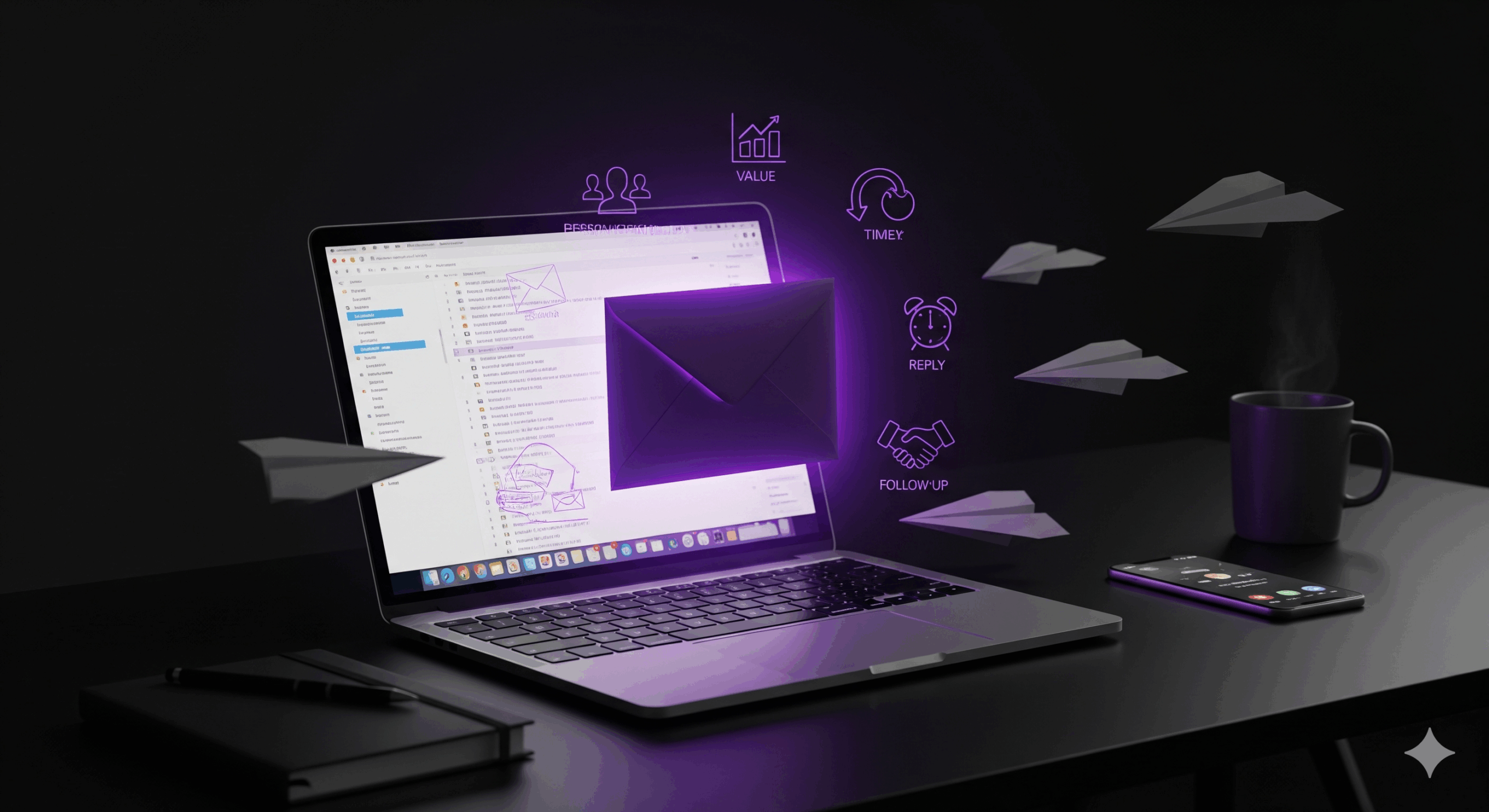
In today’s fast-paced digital landscape, where inboxes overflow with newsletters, updates, and unsolicited requests, standing out with a sales cold email is both an art and a science. For many sales professionals, entrepreneurs, and even job seekers, the cold email is still a cornerstone strategy for starting valuable conversations and forging new relationships. Yet, the reality is that most recipients are quick to ignore or delete emails from unknown senders. So, what transforms an overlooked message into one that sparks genuine interest and receives a prompt reply? This blog dives into the nuances of writing cold emails that actually get responses in a crowded inbox, the subtle triggers that prompt a reply, and actionable strategies you can apply right away to increase your open and response rates.
The Importance of Sales Cold Emails in Modern Communication
Despite the proliferation of digital collaboration tools, chat platforms, and social media, cold emailing persists as one of the most direct and personal means to reach decision makers. It’s unmatched in its ability to convey a tailored message straight to someone’s primary mode of professional communication. A well-crafted sales cold email can introduce your solution, pitch your value, and open new doors—sometimes in just a few sentences.
But it’s not only about securing a meeting or making a sale. Crafting a thoughtful cold email demonstrates initiative, research skills, and respect for recipients’ time. Done right, it signals credibility, sets positive expectations, and positions you above the average sender who simply sprays and prays their generic message across countless inboxes.
Understanding the Challenges of Crowded Inboxes
Every professional is familiar with the sheer volume of emails that flood their inbox on any given day. The modern worker receives an average of 121 emails daily—most of which are ignored due to irrelevance, poor timing, or a lack of personalization. With spam filters becoming increasingly sophisticated and users growing more discerning, the sales cold email must overcome a gauntlet of obstacles before it even has a chance of being read.
This makes it essential to consider not just what you say, but how and when you say it. It’s not just about having the best product or most competitive offer; it’s about breaking through the noise and establishing immediate relevancy.
What Separates Successful Sales Cold Emails from the Rest?
So, what’s the secret recipe for a cold email that gets opened and elicits a response? It boils down to a formula comprising research, personalization, clarity, and concise value.
1. Research: Knowing Your Recipient
The most successful sales cold emails start with thorough research. Know whom you are reaching out to—their business, pain points, recent successes, and even their communication style. Referencing specific details or recent company milestones instantly tells the recipient, “I’ve taken the time to understand you.”
For instance, instead of a generic opener like “I see you’re in the tech industry,” opt for something more tailored: “I noticed your company recently launched a new AI-driven analytics platform. That’s impressive—congratulations on the rollout!”
2. Personalization: Beyond the First Name
While starting with the recipient’s name is a standard practice, true personalization digs deeper. Reference shared connections, overlapping interests, or relevant experiences. Personalized cold emails are exponentially more likely to get responses because they break the automation spell. People want to feel seen and understood, not just targeted.
3. Clarity and Brevity: Getting to the Point Quickly
Busy professionals don’t have the bandwidth for fluff. Respect their time by stating your reason for reaching out within the first few sentences. A sales cold email that buries the ask beneath several paragraphs will almost always be skipped. Summarize your value and what you’re seeking concisely—a strong opener and a direct call-to-action (CTA) will always outperform rambling messages.
4. Value Proposition: What’s In It for Them?
Never forget that your recipient is asking one fundamental question: “Why should I care?” The most effective sales cold emails clearly articulate the benefit to the recipient. Whether it’s saving time, reducing costs, or offering unique insights, your pitch should make the recipient’s life better or easier in a specific way.
An example might be, “I can show you a way to cut your software onboarding time in half, based on our work with similar SaaS providers.” This approach puts the focus on the recipient’s potential gain and piques curiosity.
5. Compelling Subject Lines: Your First—and Sometimes Only—Chance
The fate of your sales cold email often rides on the subject line. It needs to be specific, relevant, and compelling enough to prompt an open. Avoid generic lines like “Quick Question” or “Introduction.” Instead, try “Idea to Increase [Recipient’s Company Name]’s Sales Pipeline” or “Suggestion Inspired by Your Recent Product Launch.” Make it clear that your email is worth opening because it’s about them, not just about you.
6. Human Tone and Approachability
A professional yet approachable tone can make all the difference. While you want your email to demonstrate your expertise and confidence, avoid coming across as overly formal or robotic. Conversational language, balanced with professionalism, drives engagement. Instead of, “We respectfully request a review at your earliest convenience,” you might say, “Would you be open to a quick call next week to see if this could help your team?”
7. Strategic Timing and Follow-Ups
Timing plays a significant role in your open and response rates. Early mornings or midweek afternoons tend to yield the best results, but this can vary by industry. Moreover, don’t be afraid to send polite follow-ups; often, a gentle reminder two or three days after your initial email can double your response rate. Just ensure your tone remains helpful, not pushy.
8. Authenticity and Honesty
The era of trickery and overblown claims is over. Readers are quick to spot exaggerations or insincerity in a sales cold email. Be direct about what you’re offering and transparent about your intentions. Establishing trust from your first interaction sets the foundation for a long-term relationship, even if the answer is “not right now.”
Structuring the Perfect Sales Cold Email
While there’s no single template that works for every scenario, the most effective sales cold emails follow a logical structure:
- Subject Line: Personalized and specific
- Greeting: Address by name
- Personalized Opener: Reference something unique about the recipient or their company
- Body: Brief explanation of who you are and why you’re reaching out
- Value Proposition: What’s in it for them?
- Call-to-Action (CTA): A direct and easy-to-answer question or proposal
- Signature: Full name, role, and relevant links or contact information
This structure helps organize your thoughts and ensures you don’t miss any critical element, all while keeping the email succinct and reader-friendly.
Key Benefits of Mastering Sales Cold Email
Learning the craft of the sales cold email pays dividends across multiple facets of your professional life. A well-written message can:
- Generate new business leads and expand your professional network
- Open dialogue with hard-to-reach decision makers
- Demonstrate your professionalism and communication skills
- Differentiate your company and product in a crowded marketplace
- Build trust and establish long-term relationships
Moreover, as you refine your approach and learn from each outreach, your confidence grows, and your results improve. Cold emailing is a skill that compounds over time—the more effort you invest in thoughtful research and personalization, the greater your response rates and opportunities.
Features of High-Converting Sales Cold Emails
After studying tens of thousands of emails, certain features consistently appear in the highest converting sales cold emails:
- Ultra-personalized content tailored to the recipient’s current challenges or interests
- Short paragraphs and clear, easy-to-read formatting
- Data or social proof to underscore your value proposition (such as “We helped Company X increase their ROI by 30% in 3 months”)
- A simple, specific ask (for example, “Are you available for a 15-minute call this week?”)
- Politeness and gratitude, even if the recipient declines or doesn’t respond
- Follow-up emails that respect the recipient’s time and interest level
Common Pitfalls to Avoid
Cold emailing is as much about avoiding mistakes as it is about executing best practices. Here are some common pitfalls:
- Sending mass, generic emails without personalization
- Overly long introductions or explanations
- Vague asks or unclear next steps
- Aggressive or desperate language (“I need you to reply immediately”)
- Lack of research, leading to irrelevant or inappropriate outreach
- Failure to proofread, resulting in typos or grammatical errors
How to Refine and Improve Your Sales Cold Email Strategy
Continuous improvement is the name of the game. Track your open, click, and response rates. A/B test different subject lines, intros, and calls to action. Pay attention to qualitative feedback—if a recipient says your email stood out, ask them what worked. Over time, you’ll develop an instinct for crafting messages that resonate with your audience and align with your business objectives.
Embracing tools like email tracking, CRM integrations, and even AI-powered personalization can further enhance your efficiency and results. But at the end of the day, nothing replaces the human touch—a genuine desire to help and engage with your recipients.
Conclusion: Turning Cold Contact into Warm Conversations
In today’s crowded digital ecosystem, writing sales cold emails that actually get responses requires more than just following a template. It’s about thoughtful research, genuine personalization, crystal-clear value, and respectful persistence. By focusing on the needs and interests of your recipients, you can transform a cold approach into a warm, fruitful relationship—even in the most overflowing inbox.
Key Takeaways:
- Personalization and research are non-negotiable for successful sales cold emails.
- Clarity, brevity, and a compelling value proposition boost your chances of a response.
- Build trust with authenticity, social proof, and a conversational tone.
- Keep refining your approach—track your metrics and adjust as needed.
Practical Next Steps: If you’re ready to take your sales cold email outreach to the next level, start by segmenting your target list, researching each contact, and crafting tailored subject lines. Write each email as if you’re having a one-to-one conversation, and always lead with value. Remember: it’s quality, not quantity, that makes the biggest impact.
FAQ: Writing Cold Emails That Actually Get Responses in a Crowded Inbox
1. How long should my sales cold email be?
Aim for 100–150 words if possible. Keep your message concise, clear, and focused on the recipient—longer emails are much less likely to get read or replied to.
2. What should I include in my subject line to increase open rates?
Personalize the subject line and make it relevant to the recipient. Mention the recipient’s company, a recent achievement, or address a specific challenge they face to boost open rates.
3. How many follow-up emails are appropriate?
Generally, one to two polite follow-up emails are acceptable. Space them a few days apart, and always add value in each message rather than just restating your initial ask.
4. What’s the best time of day or week to send a sales cold email?
Midweek mornings (Tuesday–Thursday) typically yield the highest response rates but experiment with your audience. Use email tracking tools to refine your timing based on actual data.
5. Why do most sales cold emails get ignored?
Most are ignored due to lack of personalization, unclear value, poor timing, or overly generic content. Taking the time to research, personalize, and focus on the recipient’s needs can significantly improve your response rates.